





TRAVELING TO IGUAZU WATERFALLS :-
Traveling to the Foz de Iguaçu waterfalls was like many other places not found on my list until I met people, in this case: two girls from the UK. Overall, not such a bad travel destination but if you don’t have enough time which side is better to visit the waterfalls and how far apart are they.
Getting to Foz de Iguaçu Brazilian side / Bus journey from Florianopolis
After about 14.5 hours on the bus from Florianopolis, we made it to the Rodoviária Internacional de Foz de Iguaçu bus station. From there we had to catch bus #105 to the local bus terminal (Terminal de Transporte Urbano TTU) and then bus #120 to the Foz de Iguazu waterfall entrance on the Brazilian side (R$1,50; ca. 0,50 USD).
Arriving at Foz de Iguazu – Brazilian side/ticket prices
When we got to the ticket office at the Foz de Iguazu waterfall park entrance, there was a pretty long queue but we got our tickets (price: R$52 (15 USD) / person) fairly quickly.
Meanwhile, we dropped our luggage at the lockers (price: R$15 (4,50 USD) / bag) and luckily they had available luggage lockers otherwise Kitty, Kate and I would have needed to carry our fairly heavy bags around the park for the whole time – it wouldn’t have been as much fun.
Important: extra tours such as helicopter flight or safari/rafting tours must be booked at the park entrance!
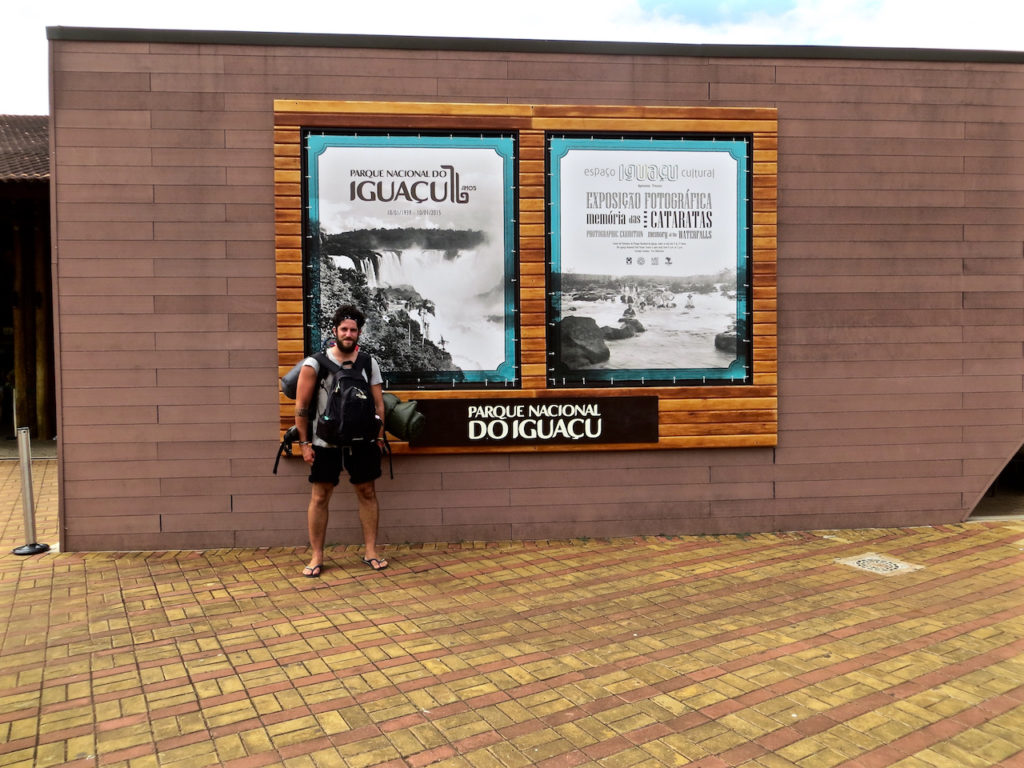

Foz de Iguazu Argentina: the Brazilian side to get the overview
From the entrance, we first hopped on the parklands bus for about 10 minutes and then got off to walk along the trail where everyone else seemed to be walking because it was the only one. At first, we were a little bit disappointed at what we were seeing and it was so humid; but the closer we got walking along the bridge, the more impressive the waterfalls were and we really enjoyed this unbelievable panorama view. We even spotted several different animals along the way.
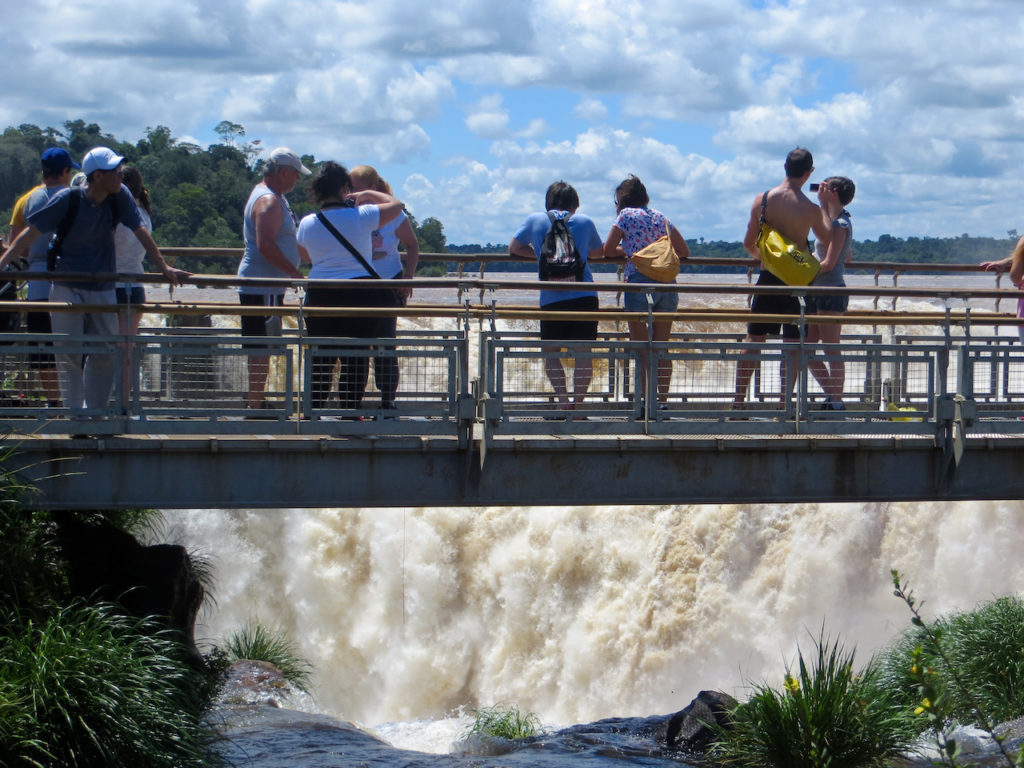
The highlight for all of us towards the end of the trail was walking across the bridge on top of the waterfall “Garganta del Diablo”, where the spray from the waterfall cooled us down and we got a little wet. (Tip: if you mind, don’t forget to bring a poncho or rain coat). We could feel this really nice breeze to cool down from the hot humid climate.
We continued walking to an outlook platform on the roof of a car parking building, which was my personal highlight of the visit to Foz de Iguazu on the Brazilian side.
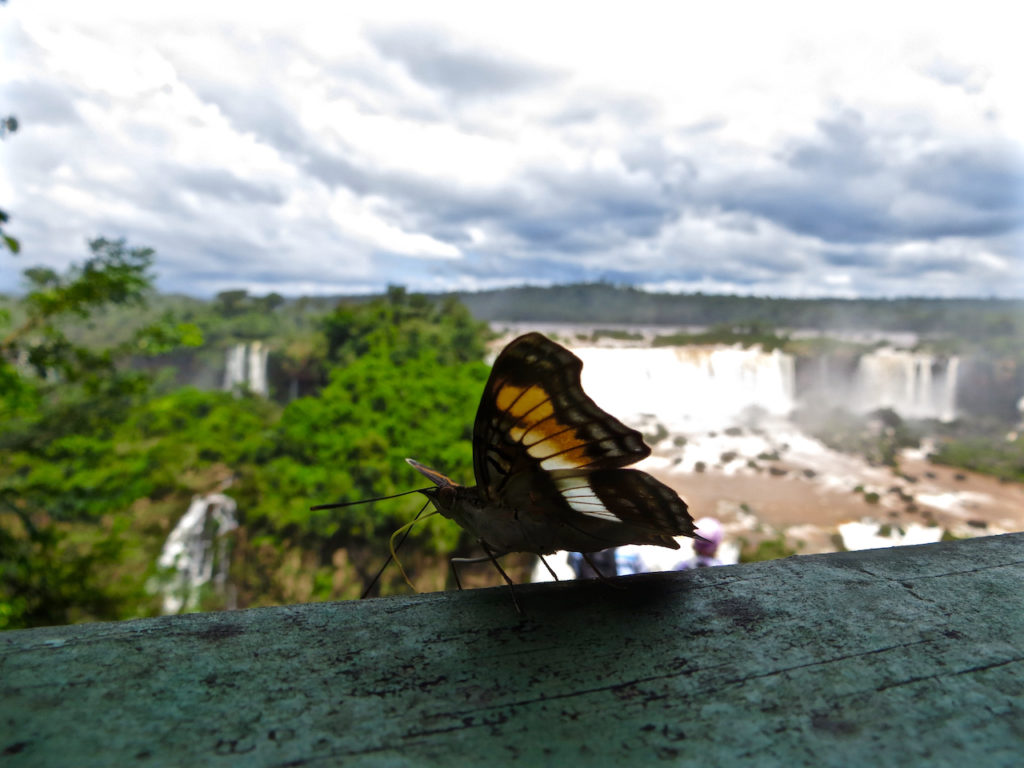


Would you dare to climb on this rail?
The next photo looks cooler than it actually is. Well, it didn’t look so impressive in real life, but still nice. I loved the adrenalin kick though!


More information can be found on the official Foz de Iguazu Brazilian website: http://www.cataratasdoiguacu.com.br/
Before leaving Brazil – Don’t forget to eat Açai
About to leave the park heading to Argentina, I had to take the last opportunity at the entrance park restaurant to try the traditional Brazilian national sorbet that everybody loves here called “açai” (R$20, ca. 6 USD), a berry sorbet with banana and granola – I can recommend it; it’s pretty healthy, tasty and very refreshing.

Heading from the park to Puerto Iguazu in Argentina / Crossing the border across the river
Option 1: The best way is to catch the bus called “Rio Uruguay”. They have a sales booth at the Brazil Park entrance (left side when facing the entrance).
Option 2: Catch a public bus #120 towards the local bus terminal (Terminal de Transporte Urbano); you will have to switch from BR bus #120 at the main street to the bus label “Argentina”. Also, if you take the Rio Uruguay bus, they will stop for you at the border crossing and direct you to get stamped at both borders.
Direct transfer by bus from Brazil falls to Argentinian falls for R$10 (ca. 3 USD).
How long does it take to travel from the Brazilian side to the Argentinian side and vice versa?
The journey can take up to one hour.
Where to stay in Puerto Iguazu?
Bambu Hostel was nice but not great. The facilities in the kitchen were really poor; they didn’t even have a lighter to light the gas stove. While cooking, I connected with Werner (60 years old) from Luzern, Switzerland. He was traveling around on his motorbike and shared some very inspiring stories of his travels and his unfortunately ill friend in Uruguay.

Arriving at Foz de Iguazu – Argentinian side / Ticket prices
Just two blocks away from the hostel was the bus terminal, where we caught a bus to the waterfalls, which took approximately 30 minutes. The bus ticket cost A$100 (ca. 5 USD) with Rio Uruguay and for a return transfer to the waterfalls and entrance to the park, it was A$260 (ca. 13 USD). For more information, check the official website: www.iguazuargentina.com/index.php.
Foz de Iguazu Argentina: discovering the Argentinian side
The bus to the waterfalls was full and I was next to a guy from Argentina who didn’t make much space sitting there with his arms and legs spread wide, drinking his Mate (a traditional South American caffeine-rich infused drink), pretending to be cool – this left me speechless. I was actually sitting in the first row, just behind the driver and I was actually worried because he was driving very fast and there were no seat belts.
Incredible story to share: On the bus, a passenger forget a key in the car and the person who just got onto the bus found it, told the bus driver and we stopped to return the key to the guy – amazing, caring people here.
Discovering the Argentinian side
We first went to the information desk to ask for advice about what is possible to do in a certain amount of time (we had one day) and what the highlights are. At first, we took the park train and headed up to walk on top of the waterfall to Garganta del Diablo– it was actually super cool being on top of the waterfall canyon and we had an amazing view; the beautiful weather helped. The sound of the water is just gigantic and through the splashing water build a rainbow, which is typical but very nice to see.
Afterward, we hiked around, enjoyed amazing views and even ended up standing in front of the waterfall, which was probably the highlight of the trip because this seemed to be the spot where I needed to be at the time!
The Argentinian side was less busy than the Brazilian side, which I really liked and it seemed there was a lot more to discover as it is bigger. Nature was really nice with a lot of beautiful yellow-colored butterflies and it was less humid. However, the Brazilian side also has its charm even though it’s smaller but very good to keep in mind for the overview.

IGUAZU WATERFALLS

IGUAZU WATERFALLS


WATCH OUT FOR THE COATIS – little cheeky monsters that try to steal your food and other things they can get their hands on.


A waterfall off-the-beaten-track: Los Saltos del Mocona
(Salto Yucumã; www.turismoyucuma.com.br)
This waterfall is an insider tip from the locals and is not very well-known compared to Iguazu, nor the focus of mass tourism but very beautiful.
The tours to get there start from El Soberbio and the journey to Los Saltos del Mocona is worth it going past some very impressive landscape. The highlight is apparently a boat trip along the river in front of the 3km waterfall. Tip: check the water level beforehand as it can range between 2-12 meters. The lower the water level, the more beautiful. Next stop was Buenos Aires by bus with Rio Uruguay for A$930 (ca. 46 USD).
Where to go from here?
The options are diverse depending on the direction you are heading: Florianopolis, Buenos Aires, Ciudad de Este can be interesting destinations to visit.
I TRAVEL FOREVER’s VIEW & RECOMMENDATION
To summarize my experience visiting the Foz de Iguazu waterfalls in two days, I can tell you to go and see the Foz de Iguazu waterfalls because they are pretty impressive and different from Niagara Falls in Canada,
for example, plus I was sharing it with two incredible girls, Kitty and Kate.
If you are traveling on a budget, I recommend to skip the Brazilian side; save the money for the park entrance and the luggage store (total ca. 20 USD). Do the Argentinian side, which is more scenic, and take a boat ride to the waterfalls. Enjoy!
#TW # IGUAZU WATERFALLS


